




More than just a musician, Dandy John is a storyteller who uses style and soul to create a space for the thinkers and the feelers. In this interview, Electro Wow explores the new Pop album ‘Dandyworld’ and the total creative freedom that comes with building a global fan base on his own terms. Essential listening for piano lovers!
1. First things first! For the readers who haven’t hit that subscribe button on your YouTube channel yet, how would you describe the Dandy John experience in three words?
Emotional. Curious. Unfiltered.
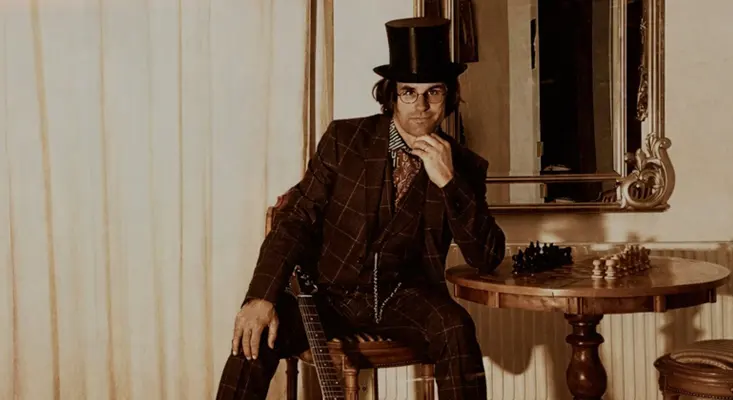
2. What sparked the dandy look? Where did the inspiration for your visual persona come from?
I’ve always been fascinated by how style can be a form of storytelling. Growing up, I noticed how certain eras — especially classic gentlemen, Jazz musicians, and counter-culture icons — used clothing to signal independence, intellect, and confidence. The dandy aesthetic felt like a way to reclaim elegance without conformity.
It’s also a quiet challenge to expectations. The look says: you can be sharp, expressive, playful, and thoughtful all at once. It’s not about nostalgia or costume — it’s about intention. Every hat, jacket, or detail is part of the conversation before a single word is spoken.
In short, the visual persona grew out of wanting to stand out without shouting, and to remind people that style can still have soul. I also wanted the look to create a clear boundary between the artistic persona Dandy and my personal identity.

3. How much does the piano define the Dandy persona? If you switched to a completely different instrument, would the character have to change as well?
The piano is a pillar of the Dandy persona — not just an instrument, but a language. In my more rhythm-driven songs—like “Freak” and “Soulmate”—the piano merges with the character, because Dandy John has the groove within him and often uses the piano more as a rhythmic instrument than as a melodic one.
The piano shapes the rhythm of how Dandy thinks, pauses, and reacts. The piano carries history, elegance, restraint, and rebellion all at once, which mirrors the tension at the heart of the character. It allows space for reflection and drama — you can whisper with it or challenge a room.
In some of my songs, I use another fictitious character, Randy John, dressed in a black leather jacket, different glasses, and the “Dandytar,” a specially crafted cigar box guitar. But over the last few months, I’ve stuck to the piano as a rhythmic instrument.
4. You skipped the big labels to build a huge YouTube fam on your own. How do you justify trading a big record deal for total freedom?
Total freedom isn’t a compromise for me — it’s the point.
A big record deal can offer reach, structure, and resources, but it almost always comes with filters: creative expectations, timelines, and market logic. I chose a different path because the Dandy John project depends on honesty and immediacy. I want to release music when it feels right, talk to my audience directly, and let the work evolve in public.
Building a community on YouTube means the connection is real and unmediated. There’s no gatekeeper between the song and the listener, no pressure to smooth out the edges that make the project human. That freedom allows experimentation, mistakes, and growth — which is exactly where the most interesting art lives.
So it’s not about rejecting success. It’s about redefining it on my own terms.
5. You’re a total DIY king! Since you write, play, and mix everything yourself, which part of the process makes you feel most like a total rockstar?
Honestly? The moment when a rough idea suddenly locks in.
Writing and playing are pure instinct — that’s where the spark lives. But the real rockstar feeling hits during production, when a messy demo transforms into something that actually hits the body. When the groove tightens, the vocal sits just right, and you realize, okay… this thing breathes now.
Doing everything myself means I get to chase that moment without compromise. No explaining a feeling, no translating a vision — just following the sound until it clicks. That’s the rush. Not the spotlight, not the applause, but that split second when the track tells you: you nailed it.
In my songwriting videos, it’s also important to me that the audience gets to experience the entire songwriting process — all the creative detours, the stumbling blocks, and the decisions along the way. I don’t want to present a polished illusion; I want to share the real journey.
When a track is finally finished, an immense sense of joy rises in me, and I genuinely enjoy the music myself. That’s what’s extraordinary about writing songs like this. At first, they’re a part of you — deeply personal and unfinished. But once they’re complete, they detach from you.
As a creator, I can then look at the song from the outside, almost as if it weren’t mine anymore, and at the same time become a listener to my own creation.
On YouTube, the music takes on yet another dimension once visuals come into play. By working with images, a kind of ‘Dandyworld’ is created — one that reaches deep into the soul.
That may be part of Dandy John’s success: creating a distinct visual language alongside a transparent artist who deliberately doesn’t want to put himself front and center. The focus isn’t on ego, but on atmosphere, honesty, and the space where music and image meet.
6. Let’s talk about the new album. Which song was the foundation for this whole project?
The foundation of the album is built on “Freak” and “Together” — and they do so in very different but complementary ways.
“Freak” represents the raw, instinctive side of the project. It’s rhythm-driven, physical, and unapologetic. That song established the groove, the attitude, and the courage to lean into imperfection. It set the tonal rule that feeling comes before polish.
“Together,” on the other hand, defines the emotional center. It’s about connection, openness, and shared experience — the human counterweight to the intensity of “Freak.” Where “Freak” moves the body, “Together” opens the heart.
Together, these two tracks form the album’s backbone: one grounded in rhythm and individuality, the other rooted in emotion and unity. Everything that followed lives somewhere in the tension — and dialogue — between those two worlds.

7. Are your lyrics 100% personal, or do you look for stories in the world around you?
They always start with something personal — but they don’t end there.
My lyrics are rooted in my own emotions, questions, and contradictions, because that’s the only place where honesty really lives. But I’m constantly observing the world around me: conversations, glances, social tensions, moments of connection or distance. Those external stories slip into the songs almost unnoticed.
So, the lyrics aren’t a diary in the strict sense. They’re more like a filter. Personal feelings pass through the outside world and come back transformed. Ideally, that’s why listeners can recognize themselves in the songs — even if the starting point was something very intimate.
At the same time, the lyrics always carry a utopian component — the ‘Dandyworld.’ While I, as a real person, have plenty of rough edges and contradictions, Dandy John often provides me with answers. As a character, he embodies understanding, but also points toward the future, reminding us that not everything has to be taken so seriously.
In that sense, he’s comparable to the fool in classical drama: a figure who uses emotion, humor, and a certain irony to highlight the problems of individuals and the world at large — yet always offers a solution. One you can either accept or question. That openness is essential to the character and to the songs themselves.
8. Every track feels like it has a message for the listener. Did you write them with that purpose in mind, or did it just happen naturally?
It happened naturally — but not accidentally.
I never sit down thinking, “Now I’ll write a message.” That would feel forced, almost instructional. Instead, I start with a feeling, a groove, or a question I don’t yet have an answer to. The message reveals itself along the way, often much later than the first idea.
Because the Dandy John world is built around reflection and openness, meaning tends to emerge on its own. Once a song is finished, I can usually see more clearly what it’s saying — sometimes even discovering things about myself I wasn’t consciously aware of while writing it.
So yes, every track carries something for the listener, but it’s more like an invitation than a statement. You’re free to take what resonates, leave what doesn’t, and make the song your own.
The Dandy often clears the path to thinking beyond familiar boundaries and encourages deeper self-questioning. What possibilities exist to break out of everyday routines? What inner worlds might open up if we allow them to?
During the songwriting process, this leads to an inner dialogue between my very personal experiences and what the musician Dandy John transforms them into. That’s the beauty of art: it develops a life of its own. It gains momentum, asks questions back, and constantly challenges me as a musician as well.
Of course, my “civilian” profession — being a teacher — inevitably finds its way into the work. There’s a certain instructive quality in the songs, a sense of message, which can feel too strong for some listeners.
But doesn’t it often take a bit of provocation to really reflect on oneself and to form an independent position? That, too, is part of ‘Dandyworld’: not giving answers on a silver platter, but creating friction — a space where thinking, questioning, and growth can begin.
9. Which message in ‘Dandyworld’ was the hardest for you to actually say out loud?
The hardest message to say out loud is that it’s okay to be unfinished.
In ‘Dandyworld,’ there’s this quiet insistence that you don’t need to have a fixed identity, a clear destination, or a polished version of yourself to be worthy. That runs against almost everything we’re taught — to optimize, to perform, to constantly explain who we are.
Saying that out loud is difficult because it exposes vulnerability. It means admitting uncertainty, doubt, and contradiction — especially as someone who also stands on a stage, releases music, and speaks to an audience.
But that’s exactly why the message matters. ‘Dandyworld’ isn’t about escape in the sense of denial; it’s about permission. Permission to pause, to question, to laugh at your own seriousness — and to move forward without pretending you already know the answer.
10. Who is this album for? Is there a specific type of person you hope finds a home in these songs?
This album is for people who feel in between.
For those who don’t fully fit into neat categories — not loud enough for one world, not quiet enough for another. It’s for listeners who think a lot, feel deeply, and sometimes struggle with the pace and expectations of everyday life.
I hope the album finds people who are searching rather than arriving. People who are open to irony and tenderness existing side by side. If someone listens and feels understood, less alone, or simply allowed to breathe for a moment, then the songs have found their home.
In that sense, the album isn’t aimed at a demographic — it’s aimed at a state of mind.
The demographic charts and age groups on YouTube constantly show me that the songs resonate across generations and countries — perhaps because they touch on something deeply universal.
After all, who hasn’t dealt with love and hate, relationships, family, individuality, or the feeling of being exposed within society? These themes cross borders and ages. If the music connects on that level, then ‘Dandyworld’ becomes less about a specific audience and more about a shared human experience.
CONNECT WITH DANDY JOHN

Hi, I’m Erick Ycaza — a music blogger with a BA in Advertising & Graphic Design. I created this blog to keep you updated with daily music news. Surprisingly, I’ve been writing about music since 2007. If you’re an artist and would like to be featured, feel free to reach out: info@electrowow.net

