

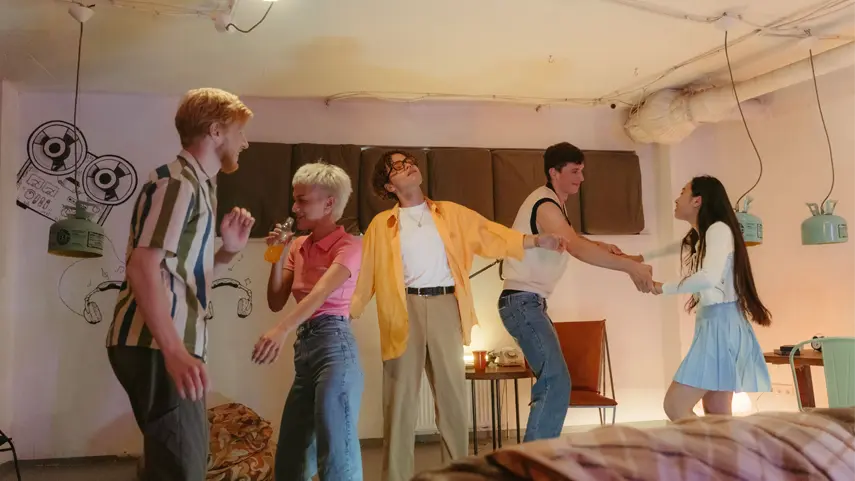




House music encompasses a vastly diverse range of sounds. Let’s take a look at all the House sub-genres and what sets them apart from each other.
House Music and its Sub Genres
Music is something that a vast majority of the human population feels they simply cannot live without. The diversity of musical genres and subgenres is incredible; according to Spotify, there are currently over 1300 different music genres in existence all over the world. Popular music genres include the more well-known ones like Pop, Rock, and House.
There are some genuinely bizarre genres and subgenres out there, though; some of the weirdest include “Lowercase,” Folktronica, Glitch Hop, and Vaporwave. House music is one genre that has vast diversity within itself; twelve different styles of music exist under the House umbrella, and they each have a dedicated legion of fans who adore them above all other types of music. In this article, we’ll talk a little about each genre and help House newbies understand how to distinguish one from another.

What Is House Music?
House music itself is technically a subgenre of EDM (electronic dance music). It’s the first subgenre of the genre and is so old and well-loved that it has since become a genre in its own right. Almost all the other sub-genres of EDM are descendants of House, which itself is a direct descendant of the Disco that was so popular in the 70s and 80s. House is characterized by a four-four beat ( one, two, three, four, and repeat as opposed to, say, a waltz which is one, two, three, and repeat) that usually ranges between 118 and 130 BPM (beats per minute). The kick drum is the most defined beat and carries everything else (similar to Disco). It’s usually accented by electronic snare and hi-hat samples on the second and fourth beats.
Acid House
The 80s saw the birth of Acid House. The radical countercultural movements, the availability of illicit substances, and the expansion of what was called “The Second Summer of Love” by music historians all contributed to this subgenre’s sound and its name. The sound of the TB-303, along with a steady kick and a BPM of 120 to 130, makes Acid House what it is.
Big Room House
This is one of the most widely known and most loved House sub-genre featuring popular artists like Tiesto, Martin Garrix, and Swedish House Mafia. If you’ve ever heard a buildup and waited for the drop you know is coming, then you’ve experienced Big-Room House. BPM is usually between 126 and 132.
Chicago House
An excellent example of Chicago House is the 1983 classic On and On, which is often called the first House record ever made on vinyl. Jesse Saunders used that well-known four-on-the-floor beat and layered in some keyboards for a fuller sound.
Deep House
If you like it slow and groovy, then Deep House is for you. Vocals are often a part of the package, which makes it such a popular subgenre at clubs and parties. You can hear the jazz, soul, and funk influences come through at 110 to 125 BPM.
French House
Here’s where Disco and House really connect and show their mutual roots. French House incorporates a lot of Disco samples and has a very nostalgic aspect to it; think Daft Punk and Bob Sinclair. French house is very popular on commercial radio.
Bass and Electro House
There’s a heavier side to House, and this is it. Bass and Electro House started to brew back in the 90s, in what some would argue was the peak of House (rave) culture. In the mid-2000s it came into its own as a heavier, more intense option for House fans. Bass and Electro House sit at between 125 and 135 BPM.
Future House
Future House is a sort of melting pot for any Avante Garde artists to try out things that don’t fit into any existing category. You’ll find the weird and the wonderful in this category between 120 and 130 BPM.
Latin House
As the name implies, Latin House is heavily influenced by music associated with Latin cultures: Bossa Nova, Samba, Mambo, and Tango, to name a few. The time signatures here are a little more unpredictable as they can line up more with traditional House four-fours or with the beat associated with inspiring music. It’s a lively sound.
Minimal House
Stark, cold, sharp, and hard, Minimal House comes from Techno influences. Less synth layering, a lot of focus on kicks and hi-hats, and a BPM of between 115 and 130.
Progressive House
In contrast to minimal, Progressive House focuses a lot on layering for texture. Samples and elements are added and taken away to create peaks and valleys. Progressive House tracks are often very long, with some of the longest build-ups being around 4 minutes. It’s an artist’s playground.
Tech House
House and Techno converge once more in Tech House. The kick is more subtle here, and there are a lot of filters or distortion overall percussion elements. Melodic synths are repetitive, and the waves layered into the sound harken back to traditional Techno.
Tropical House
Last but not least, tropical. Its roots are in Dancehall sounds, so it’s an excellent choice for playing a lively party with lots of dancers. Tropical House has found its way into Pop since the early 2000s.
Wrap Up
The different brands of House music are all easy to differentiate if you know what you’re looking for; which style is your favorite?
Article partner: 

Hi, I’m Erick Ycaza — a music blogger with a BA in Advertising & Graphic Design. I created this blog to keep you updated with daily music news. Surprisingly, I’ve been writing about music since 2007. If you’re an artist and would like to be featured, feel free to reach out: info@electrowow.net

