




Jordanne Erichsen is the Founder of Express Voice Studio, a vocal coach, singing teacher, and entrepreneur with a background in opera. She holds a Bachelor of Music in Opera from the University of Regina and a Master of Music in Opera from the University of Ottawa, and went on to spend time in New York City deepening her training in vocal technique.
Her own curiosity about the connection between the voice and the body eventually led her to Alexander Technique: the body-mind training and more than 500 hours of formal study in the Alexander Technique. She has also performed professionally and, before founding Express Voice Studio, created The Singers Tension Podcast in 2014.
Those experiences have all shaped the way she approaches teaching today and the kind of community she has built at Express Voice Studio.
1. Let’s start from the top, what’s Express Voice Studio about, and what happens in the body when someone sings that makes them feel calmer?
Express Voice Studio is a new-age music school: we find incredibly talented, working Canadian artists and make them available for private lessons. We teach voice, voice acting, music production, songwriting, guitar, violin, piano, and modeling/camera readiness, and our services are always expanding.
Lessons are private and tailored to the student’s goals and interests. When it comes to singing specifically, the reason it calms people down isn’t mysterious. To sing, you have to breathe low and slow, and the exhale is long because you’re holding a phrase.
That kind of breathing is the same thing every relaxation technique is trying to get you to do; you’re just doing it without being told to relax.
On top of that, you’ve got vibration in your chest and throat, and your attention is fully occupied. You can’t run through your to-do list and match a pitch at the same time.
So your body shifts out of the wound-up state, and your head gets a break. People walk out of a 45-minute lesson calmer, centered, and connected to their body.
2. What kind of training or background do you have, and what was the moment you knew you wanted to start your own studio?
I have a Master of Music in performance for Opera from the University of Ottawa, after which I moved to NYC to study privately. So I came up through the classical side, which is a very rigorous and structured curriculum covering technique, music theory, music history, and acting.
The studio came out of the lived experience of myself and the people I cared about, all making that transition – or trying to – from student to paid performer. I’d been teaching for years, and I kept seeing how little of a lesson fee actually reaches the person teaching the lesson.
The music school also determined how much the lesson would be, which didn’t give me the freedom to earn what I felt my 10+ years of music education and performing experience were worth. Beyond myself, I saw that other amazing artists who surrounded me faced the same problem: teaching didn’t pay enough to allow them the time to make their own art due to a combination of the pay being too low and the energy it required to give the lessons depleting them.
So, 7–8 hours of teaching a day was debilitating as an artist trying to make art. That bothered me enough that I started Express Voice Studio in 2018. The idea is that the teacher (the artist) keeps the larger share of what students pay; we want to give financial autonomy back to artists.
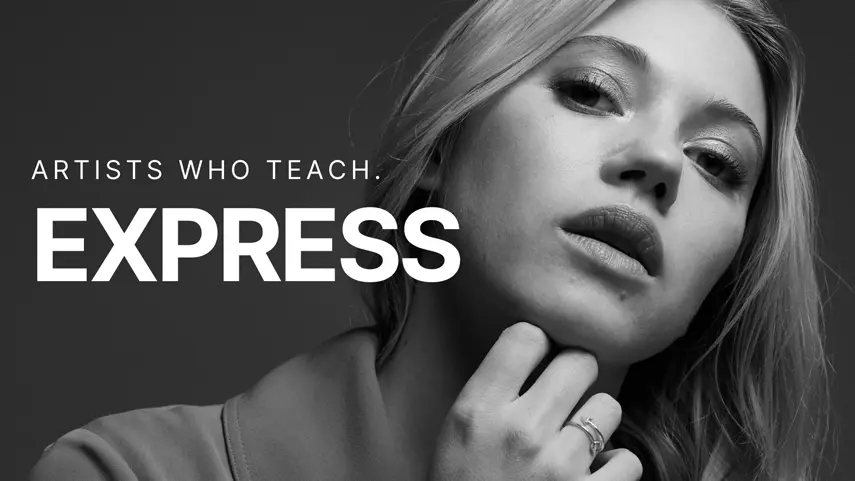
The tagline we use is “artists who teach,” and we mean it literally. Everyone teaching here is also out doing the work of being an artist: They are inspiring, and I wanted to liberate them to be the creative person they were born to be, while also being able to pay their bills.
3. Some people might hear “stress relief” and think “therapy.” Is that an accurate label, or is this something different?
Therapy can be taken as a literal, clinical therapist session or as doing or experiencing something therapeutic. Singing is therapeutic.
You’re breathing well, you’re making sounds, you’re with another person for an hour, and you’re getting better at something. That combination does a lot for how you feel: it reduces stress, fosters a feeling of connection and achievement, connects you with your body and thus centers you, making you aware of the moment and your physical existence.
We are busy people; we are stressed people. Doing something that instantly asks us to be singularly focused and very aware of our physical sensations is a type of meditation. There are studies that show that, in as little as a few minutes, singing can help regulate you: reducing anxiety and producing a sense of calm.
4. Meditation, exercise, yoga, they all claim to lower cortisol too. Why should someone pick singing over those?
Honestly, they shouldn’t pick. If yoga is working, keep doing yoga. But humans like variety, so why not give yourself various ways to feel great?
Where singing is different is that it’s hard to quit in the way people quit meditation. Meditation asks you to sit with your own head, and a lot of people find that unpleasant, so they stop after a week.
Singing gives your brain a job. You’re listening, adjusting, watching your breath, chasing a note. There’s no room left to spiral into stressful thoughts. And there’s a second thing that the others don’t really offer, which is that it enables your self-expression!
If you have ever done a workout class or a breathwork class where they have asked you to make sound, you will know that this is a secondary experience to the initial action: making sound is a release on its own. Making sound that taps into your emotions and personal experience is a human experience.
It is a visceral and cerebral way to connect to something deep inside you: everything you have been, everything you are, and everything you hope to be.
5. Why do you think so many more people started turning to voice lessons after the pandemic hit?
The first is human connection. People wanted contact with another person, and a voice lesson was one of the few things you could still do one-on-one with some safety adjustments. Masks, distance, and a plastic screen. For a lot of students, that hour was the only real human-to-human, in-person interaction they had all week.
The second is money. Nobody was travelling, going out, or spending money on much of anything, so there was room in the budget for something people had wanted to try for years and always put off.
The third is boredom, plain and simple. People were home with a lot of empty hours. Singing needs no equipment – you already own the instrument, and you can do it in a small apartment. It was sitting right there.
6. Can someone who’s never sung a note in their life sign up, or is some experience expected?
No one needs to have any previous experience to learn to sing. We don’t expect it, as most of our students are adults who are looking to try this for the first time as a hobby.
7. Who picks the songs? Is it up to the student, or do you guide that based on what they need?
We want the student to pick what they want to sing, but we may make a suggested modification. If you show up wanting a song that sits way above your current range, we’re not going to spend three months failing at it, as this will be frustrating for you.
We’ll find something in the same world that works, build the technique, and come back to the hard one later. That’s the part students can’t do for themselves, knowing what’s reachable and what’s reachable in six months. But the taste is always theirs.

8. Is there flexibility with pricing and scheduling, like payment plans or options for people with busy schedules?
Yes on both!
On scheduling, all of our artists are full-time artists, so they don’t have to schedule lessons outside of their 9–5, so days, evenings, and weekends are all normal. If your week is unpredictable, we can work around that instead of locking you into the same Tuesday slot forever.
On pricing, you can buy lessons in packages or go lesson to lesson. We want to make it as easy as possible for students to take lessons, and we don’t believe in locking you into a subscription or package.
9. Beyond helping with stress, what other transformations have you seen in people since you opened the studio?
The one I didn’t expect is how much it changes people’s speaking voice. Students come in for singing, and a few months later, they tell me they’re getting through presentations without their voice shaking, or people stop feeling fatigued after a day of giving a tour.
You’re learning breath support and how to project, and that doesn’t stay in the lesson.
Then there’s the confidence piece, which sounds like a cliché until you watch it. Singing in front of another person is genuinely exposing. Once you’ve done that every week for a year, a lot of other uncomfortable things get smaller.
And some people just fall in love with it. We’ve had students who signed up to have one nice hour a week end up in a band or doing open mics or even competing in singing competitions.
10. If someone’s not here for stress relief but wants to go professional with their voice, is there a place for them too?
Definitely, and that’s a big part of who we are. Our teachers are working artists, people who are actually gigging, recording, and auditioning. So if your goal is to perform, you’re learning from someone who’s doing it now.
That track looks different. It’s more technical; there’s more repertoire, we’re talking about audition material, healthy practice habits, how to protect your voice when you’re singing several nights a week, and how the industry actually works.
The pace is higher, and these kinds of students will often take several lesson types, like combining singing with songwriting lessons and music production. Additionally, they may work with various teachers to get experience in different genres of music.
Both kinds of students are in the same studio, and I like that. The person unwinding on a Thursday night and the person prepping for an audition are doing the same fundamental work; they just want different things at the end of it.
CONNECT WITH EXPRESS VOICE STUDIO

Hi, I’m Erick Ycaza — a music blogger with a BA in Advertising & Graphic Design. I created this blog to keep you updated with daily music news. Surprisingly, I’ve been writing about music since 2007. If you’re an artist and would like to be featured, feel free to reach out: info@electrowow.net