






Becoming a successful musician may mean becoming professional with a career in music to some or simply proficient in playing an instrument to others.
Regardless of your goals, there are some skills that you should know that will help you be more successful in the world of performance. We have compiled some of these, like learning to conduct, sight-reading new pieces, and more. Read below to learn more about all the ways you can improve your skills as a musician!
Conducting
Even if you are not a conductor, any aspiring musician should take classes in conducting because it helps you to understand rhythm better and beat counting.
You can also expand your view of music past just your instrument to all the other instruments and how they all blend together to create a beautiful piece.
A class with Prof. Vierneisel will show you how different instruments interact, making you a better performer and professional with your instrument of choice.
Sheet Music Sight Reading
There are two different types of music you can use: sheet music and tabs. Tabs are a specific method that usually includes fingering patterns listed with the note/chord associated with it.
The notes are then laid out according to the notes listed in letter form, whereas sheet music has a series of lines and symbols representing notes. Tabs are great for learning a new instrument but less useful for professionals.
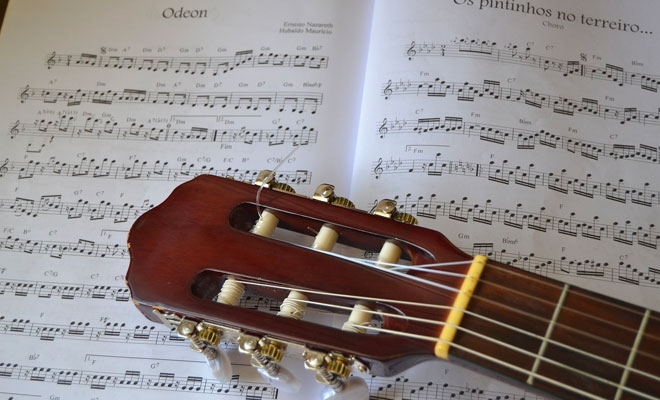
Being able to read sheet music and understand the beats and note lengths allows you to join other performers and play along with them right away, even with little to no rehearsal. Tabs require much more rehearsal and are more difficult to play along with someone else.
Multiple Instruments
You can widen your perspectives as a musician if you play multiple instruments, as it will give you a better understanding of other performers while giving you more versatile skills and more opportunities. Some good alternatives for you, based on your current instrument, are:
• guitar, try the piano
• ukulele, try the guitar
• clarinet, try the saxophone
• flute, try the oboe
Most of these instruments are relatively easy transitions, as there are many similarities between the two. Although it may be daunting, don’t be afraid to pick up a new instrument and practice widening your opportunities.
Digital Music Basics
Taking some time to practice with a microphone and software also helps you to expand opportunities from just live performance to digital music as well.
If you start to practice recording and mixing, you can create your own tracks and use your own creativity to make new and inventive music, making you a more rounded performer!
Communication
Having effective communication skills, both verbally and nonverbally, with other performers, producers, or listeners helps you perform better with others.
With good communication skills, you will be in tune with those you are performing with and seamlessly transition between pieces with only a gesture, if need be. You will also be able to read the room better and alter your performance style if need be.
Final Thoughts
Making a career out of instrumental performance is a worthy endeavor and a challenging one. To make yourself stand out, you should be as well-rounded of a musician as you can be. Above are some extra skills you can learn that help you with this!
Some things as basic as picking up a second instrument help, or more complex ones, like learning the basics of conducting, will give you more perspectives on music and how you can be a better performer and creator.
Hi, I’m Erick Ycaza — a music blogger with a BA in Advertising & Graphic Design. I created this blog to keep you updated with daily music news. Surprisingly, I’ve been writing about music since 2007. If you’re an artist and would like to be featured, feel free to reach out: info@electrowow.net

