





Have you ever asked yourself what makes a speaker really loud? No matter if you are a music enthusiast or a home cinema fan, in order to have a great audio experience, it is important to understand the science behind decibel levels.
In this article, we are going to explore the world of decibels and reveal the secrets of really loud speakers. We will also guide you through the factors you need to take into consideration before you buy your loudspeaker. So, let’s get started!
What Are Decibels?
Before we start talking about loudspeakers, it is important to understand the measurement units used to express sound levels – decibels (dB). Decibels are units that measure the intensity of sound. There is one thing you should know – when you increase the sound by just 10dB the loudness of the perceived sound doubles. This is the reason why just minor changes in the decibel ratings can have a great impact on your listening experience.
What Decibel Range Is Considered Loud?
To make it easier to understand this, we have made a short list of the common sound levels and then the number of decibels for each:
• Whisper: 30 dB
• Normal conversation: 60 dB
• Vacuum cleaner: 70 dB
• Lawnmower: 90 dB
• Live music concert: 100-120 dB
• Jet engine at takeoff: 140 dB
As you can see, the sound levels can vary significantly. A speaker producing 100 dB or more is typically considered loud, however, this can be different depending on the person listening.

What Is The Decibel Level For A Speaker To Be Considered Really Loud?
A really loud speaker typically produces sound at a level of around 100 decibels (dB) or higher. Decibels are a unit used to measure the intensity of sound. For reference, normal conversation is about 60 dB, while live Rock concerts can reach 110-120 dB. Keep in mind that prolonged exposure to sounds above 85 dB can cause hearing damage.
How Do Loudspeakers Work?
Loudspeakers transform electrical signals into sound waves by using a diaphragm to vibrate and produce sound. In simple terms, the larger the diaphragm and the more powerful the amplifier driving the speaker, the sound output will be higher.
So an essential factor in determining the loudness a loudspeaker can produce is the decibel rating.
What to Look for in a Loud Speaker
Before you buy a loudspeaker system it is important to consider the following factors. This should help you get the right level of loudness.
Speaker Sensitivity
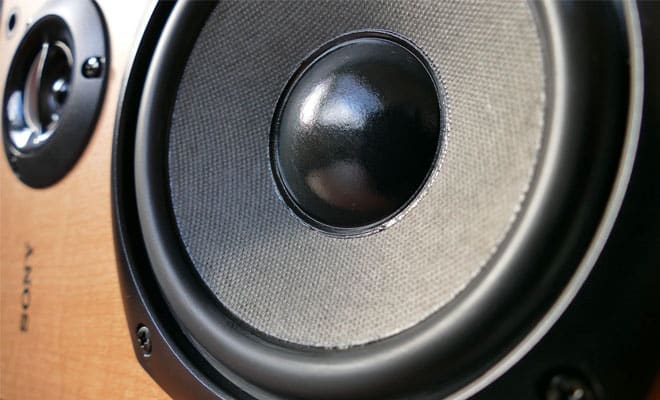
Measured in dB, speaker sensitivity indicates how effectively a speaker can convert power into volume. Speakers that have higher sensitivity will use less power to produce more volume. On average the sensitivity will be around 85-88 dB. However, a sensitivity of 90 dB or higher is considered excellent.
Amplifier Power
The speaker will be louder if you use a more powerful amplifier. Make sure that the wattage output of the amplifier is compatible with the power handling capacity of the speaker you want to buy.
Room Size
Another factor that plays an important toe in determining the appropriate loudness is the size of your listening space. You will need a more powerful speaker if you are going to use it in a large room. This will help effectively fill the space with sound.
Listener Preferences
Take your own listening habits and preferences into consideration. If you prefer to listen to music at higher volumes or you want an improved home cinema experience. You are going to need a speaker system that can produce higher decibel levels.
Understanding the Risks of Excessive Sound Levels
Although loudspeakers can improve your listening experience, it is important to understand the risks associated with extreme sound levels. Being exposed to sounds above 70 dB for a longer period of time can result in permanent hearing damage. Therefore, you need to practice safe listening habits all the time and use hearing protection when necessary.
Conclusion
In the end, we have to say that it is really important to understand the science behind decibel levels. This can help you improve your audio-listening experience. As for the decibels, the most important thing to know is that even minor changes in the decibel rating can significantly impact your listening experience.
If you plan to buy a loudspeaker, make sure to consider the following factors: speaker sensitivity, amplifier power, room size, and your own listening preferences. While loudspeakers can enhance your listening experience, you have to be aware of the negative effects of prolonged exposure to excessive sound levels. If necessary, consider using hearing protection or just start practicing safe listening habits. You can even take an online hearing test. This should help you enjoy your music or home cinema audio with optimal loudness and safety.

Hi, I’m Erick Ycaza — a music blogger with a BA in Advertising & Graphic Design. I created this blog to keep you updated with daily music news. Surprisingly, I’ve been writing about music since 2007. If you’re an artist and would like to be featured, feel free to reach out: info@electrowow.net

